All-Terrain vs. Rough-Terrain Cranes: How to Choose the Right Fit for Your Project
Choosing a crane isn't simply a matter of finding a machine with enough lifting capacity. The right equipment also needs to work with the conditions of the jobsite, the distance it needs to travel, the space available, and the type of lift being performed.
Two crane types often considered for construction and industrial applications are all-terrain cranes and rough-terrain cranes. Both provide mobility and lifting capability, but they're designed with different priorities in mind.
So how do you know which one is right for your project?
What Is an All-Terrain Crane?
An all-terrain crane is designed to combine the road-going capabilities of a truck crane with the off-road capabilities needed for many construction and industrial jobsites.
These cranes can travel on public roads and then run on a variety of jobsite surfaces once they arrive. Depending on the model, they can also provide substantial lifting capacity and reach.
That combination makes all-terrain cranes particularly useful when a project requires both mobility and significant lifting capability.
When might an all-terrain crane make sense?
An all-terrain crane may be an excellent choice when:
- The crane needs to travel between locations
- The project requires a high lifting capacity
- The job involves substantial reach or height
- The crane needs to run on varied terrain
- The project involves large construction or industrial lifts
- The equipment needs to be mobile throughout the project
For example, SWIR's all-terrain fleet includes cranes ranging up to 770 tons, providing options for projects with very demanding lifting requirements.
What Is a Rough-Terrain Crane?
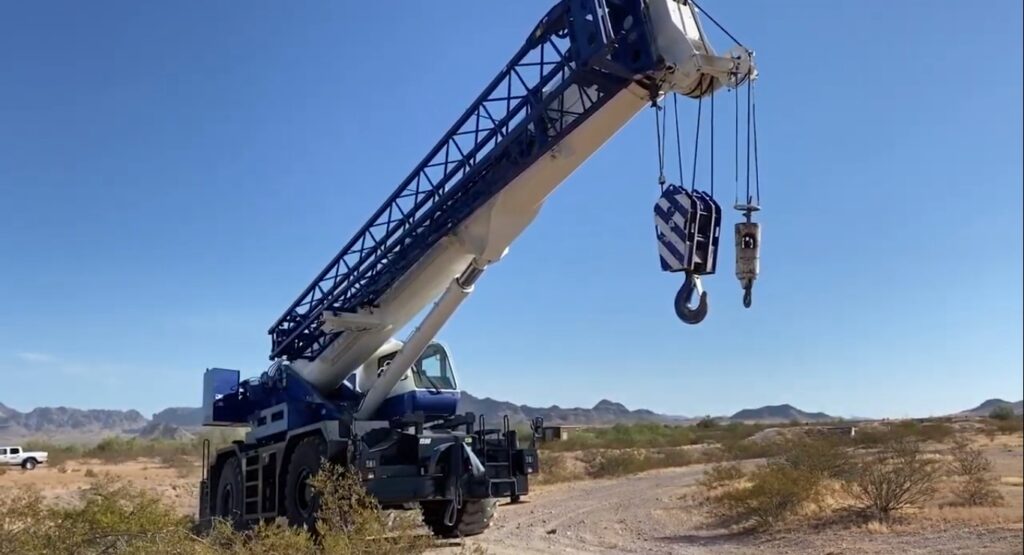
Rough-terrain cranes are designed primarily for off-road operation.
Rather than focusing on long-distance road travel, their design prioritizes maneuverability and mobility around challenging jobsites. Their compact configurations can make them useful where access is limited or where the crane needs to move across uneven surfaces.
Rough-terrain cranes are commonly found on construction and industrial jobsites where ground conditions or available space make maneuverability especially important.
When might a rough-terrain crane make sense?
A rough-terrain crane may be an excellent choice when:
- The crane will primarily run off-road
- The jobsite has uneven or challenging terrain
- Space is limited
- Maneuverability is important
- The project involves pick-and-carry operations
- The crane doesn't need to travel significant distances on public roads
SWIR's rough-terrain fleet ranges from 30 to 160 tons, providing options for a variety of construction and industrial applications.
All-Terrain vs. Rough-Terrain: What is the Main Difference?
The biggest difference comes down to where and how the crane needs to run.
| Consideration: | All-Terrain Crane: | Rough-Terrain Crane: |
|---|---|---|
| Road Travel | Designed for road travel | Primarily designed for off-road use |
| Jobsite mobility | Strong | Excellent |
| Uneven terrain | Capable | Particularly well suited |
| Lifting capacity | Can range from moderate to very high | Typically, lower than large AT cranes |
| Tight jobsites | Depends on crane size | Often a strong choice |
| Long-distance movement | Better suited | Not the primary purpose |
| Pick-and-carry applications | Model dependent | Common application |
Neither crane is automatically "better." The right choice depends on what the project requires.
Which Crane Is Better for a Tight Jobsite?
If the project involves restricted access, limited working space, or difficult terrain, a rough-terrain crane may be worth considering.
However, jobsite size alone shouldn't be the deciding factor. An all-terrain crane may still be the right choice if the project requires more lifting capacity or if the crane needs to travel between locations.
The key question is: what does the crane need to do once it arrives at the jobsite?
Which Crane Is Better for Long-Distance Travel?
If a crane needs to travel significant distances between locations, an all-terrain crane may offer a practical advantage because it's designed for road travel.
This can be particularly useful for projects where the crane needs to move from one work area to another, or where transportation coordination is an important part of the project plan.
Does Lifting Capacity Determine Which Crane You Need?
Capacity is one of the most important considerations, but it shouldn't be the only one.
A crane needs enough capacity for the load at the required working radius and height — not simply enough capacity to lift the load at its maximum rating.
Other factors include:
- Load weight
- Lift radius
- Required boom length
- Lift height
- Ground conditions
- Available setup space
- Obstacles around the work area
- Transportation requirements
A 50-ton load, for example, doesn't automatically mean you need a 50-ton crane. The actual crane requirements can change significantly depending on how far the load must be lifted and where the crane needs to be positioned.
What Other Types of Cranes Should You Consider?
Sometimes neither an all-terrain nor a rough-terrain crane is the best fit. The project may call for another type of mobile or specialty crane depending on its requirements.
Hydraulic Truck Cranes: Hydraulic truck cranes are designed for road travel and can be transported to jobsites without the same considerations associated with some larger crane configurations. SWIR offers hydraulic truck cranes from 40 to 120 tons.
Boom Trucks: Boom trucks combine a truck chassis with a crane and can be useful for smaller-capacity lifting applications. They can also provide a practical solution when the project doesn't require a large crane setup. SWIR's boom trucks range from 18 to 50 tons.
Crawler Cranes: Crawler cranes are designed to run on tracks and are often used for projects requiring substantial lifting capacity over longer periods. SWIR offers crawler cranes ranging from 200 to 300 tons.
What Questions Should You Ask Before Renting a Crane?
Before selecting equipment, it helps to have as much information about the lift as possible. Consider these questions:
- What is the maximum weight of the load?
- How far does the load need to be lifted?
- How far from the crane will the load be positioned?
- What are the ground and access conditions?
- How much space is available for crane setup?
- Will the crane need to move around the jobsite?
- Does the crane need to travel on public roads?
- How long will the crane be needed?
- Are there overhead or surrounding obstacles?
Having this information available can make it much easier to decide which crane configuration is right for the job.
The Right Crane Depends on the Entire Job
An all-terrain crane may be the right answer for one project, while a rough-terrain crane — or an entirely different crane type — may make more sense for another.
The goal isn't to find the largest crane available. It's to find the right combination of capacity, reach, mobility, access, and site suitability for the work being performed.
SWIR's diverse fleet includes all-terrain, rough-terrain, hydraulic truck, boom truck, and crawler cranes, allowing its team to consider the full project when helping customers decide on equipment needs.
Planning an upcoming lift? Contact SWIR to discuss your load requirements, jobsite conditions, and equipment needs. Their team can help you decide which crane configuration makes the most sense for your project.